Greece has some of the best solar conditions in Europe, and electricity is a significant monthly cost for both households and businesses. It is no surprise that solar panels on roofs and terraces are now a common sight. The rules for connecting a system to the grid have changed in recent years, though, and much of the advice found online is out of date. This guide explains, in plain English, how solar PV works in Greece today, what the main options are, and what to consider before you invest.
Why solar makes sense in Greece
A well-designed photovoltaic system turns abundant sunshine into electricity used directly by your home or business. The main benefits are:
- Lower electricity bills, especially when most of the energy is used on site during the day
- Protection against future rises in electricity prices
- Greater energy independence, particularly when combined with battery storage
- Higher property value and a better energy profile for the building
- Low maintenance and a long service life for quality equipment
How quickly a system pays for itself depends on its size, the cost of installation, how much of the energy you use yourself and the electricity prices you pay. That is why a proper study for each property matters more than any general rule of thumb.
How self-consumption works today
Net metering: closed to new applications
For many years, Greek households and businesses used net metering, under which the energy fed into the grid was offset against the energy taken from it. New applications for net metering closed in 2024. Systems already connected under net metering keep their existing arrangement under their contracts, but new systems follow different rules. If you read an article recommending net metering for a new installation, it is out of date.
Net billing
The main option for a new grid-connected system is now net billing. You use the solar energy you produce in your own building first. Any surplus that is fed into the grid is credited at market-based prices, while the electricity you draw from the grid is billed normally. Net billing agreements are concluded with your electricity supplier for a long fixed term, and virtual net billing also allows a system to serve a consumption point in a different location.
The practical consequence is simple: under net billing, the value of a system comes mainly from the energy you consume yourself. Sizing the system to your real daytime consumption, and considering a battery to shift solar energy into the evening, matter more than ever.
Zero-export systems and batteries
It is also possible to install a system that does not feed any energy into the grid, sized purely for self-consumption. A self-consumption framework adopted in 2026 also introduced standalone battery storage for self-use and simplified procedures for small plug-in “balcony” solar systems. These options are evolving, so we always confirm the current rules for each project before proposing a solution.
Solar PV for homes
For a house or apartment building, the key questions are how much roof or terrace space is available, how it is oriented and shaded, and how and when the household uses electricity. A home with air conditioning, a heat pump, an electric water heater or an electric car uses far more energy during the day than a home that is empty until the evening, and that changes the ideal system size.
Solar works best as part of a wider energy upgrade. Insulation, modern windows and an efficient heat pump reduce how much energy you need in the first place, so the solar system covers a larger share of it. If you are planning a renovation, it is the ideal moment to prepare the roof, cable routes and the electrical panel for PV and batteries.
Solar PV for businesses
Businesses often have the strongest case for solar, because most of their consumption happens during daylight hours: offices, shops, hotels, workshops, cold stores and light industry. Large flat roofs and car parks offer plenty of space for panels.
Commercial projects benefit from careful engineering: a structural check of the roof, a detailed analysis of the load profile, and integration with existing electrical installations. Through our partnership with ZERIONEX, we can also connect PV systems to monitoring and automation platforms (PLC, SCADA and telemetry), so production, consumption and alarms can be followed in real time and the system can be managed remotely.
Batteries: when are they worth it?
A battery stores surplus solar energy during the day and releases it in the evening or at night. Under net billing, where exported energy is valued at market prices, a battery can significantly increase the share of solar energy you use yourself. Whether it makes financial sense depends on your consumption pattern, the size of the system and current equipment prices. We model each case rather than recommending a battery by default.
From study to switch-on: the process
- Site visit and study. We assess the available area, orientation, shading, structural adequacy and your consumption, then propose the optimal system size and expected performance.
- Proposal and quotation. A detailed offer covering equipment, installation and the self-consumption scheme that suits you.
- Permitting and grid connection. We prepare the technical file and handle the applications and connection procedures with the network operator and your supplier.
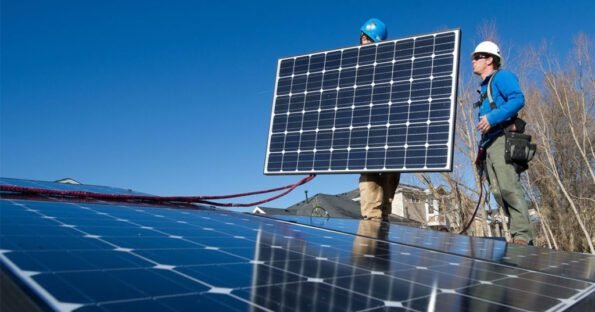
- Installation. Certified panels, quality inverters, mounting structures, protection panels and earthing, installed by experienced crews to strict safety standards.
- Commissioning and monitoring. Final checks, connection, and set-up of production monitoring on your phone or computer.
- Support and maintenance. Periodic inspection, cleaning and technical support for the life of the system.
Choosing equipment and an installer
The inverter is the heart of the system, converting the direct current from the panels into usable electricity, so it deserves as much attention as the panels themselves. Look for established brands with good local support and clear warranties. Equally important is the installer: ask who carries out the study, who handles the paperwork, what the warranty covers and who you call if something goes wrong.
A few questions worth asking any provider:
- How was the system size calculated, and what share of the production will I use myself?
- Which self-consumption scheme applies to my project, and why?
- Is the roof structurally suitable, and how will waterproofing be protected?
- What monitoring will I have, and what support is included after installation?
A note for owners who live abroad
Many owners of holiday homes and investment properties in Greece live elsewhere for most of the year. Solar can still work very well, especially for properties that are rented out in summer, when demand for air conditioning peaks. Remote monitoring lets you see how the system performs from anywhere, and a single installer who handles the study, permits, installation and maintenance means you do not need to coordinate several contractors from abroad.
Talk to us about your project
S.A. Construction and Development designs and installs solar PV systems for homes and businesses across Greece, from the first study and permits to installation, monitoring and maintenance. Solar can also be combined with an energy upgrade under the Exoikonomo programme or with new construction.
Want to know what solar could do for your property? Contact us for a free study. We will look at your roof, your consumption and the current rules, and give you a clear, honest proposal.